The FRCA syllabus is overwhelming.
That's why we built Helix.
Residents can feel buried before they begin. So we built the resource we wanted ourselves: 4,000+ SBAs and CRQs, every one mapped to the RCoA curriculum and ranked by exam yield.
Helix serves the highest-value topics first, brings each one back to target where you need it most, and always shows you where you are. Together you'll cover everything the exam demands, in the right depth.
Every option explained, not just the answer.
A real clinical vignette.
Exam-style stems written by doctors, pitched at the depth your exam asks. The decision you will actually face on the day.
Every option, explained.
Not just why the right answer is right. Why each wrong one is wrong, in a line, traced to a primary source.
Drug cards where they matter.
Colour-matched to the syringe label from theatre. Dose, onset, duration, and what to watch for.
Clinical pearls, visuals & more
Clinical pearls, diagrams and formulas ride with the question, so the reasoning sticks, not just the letter you picked.
Practise your viva out loud.
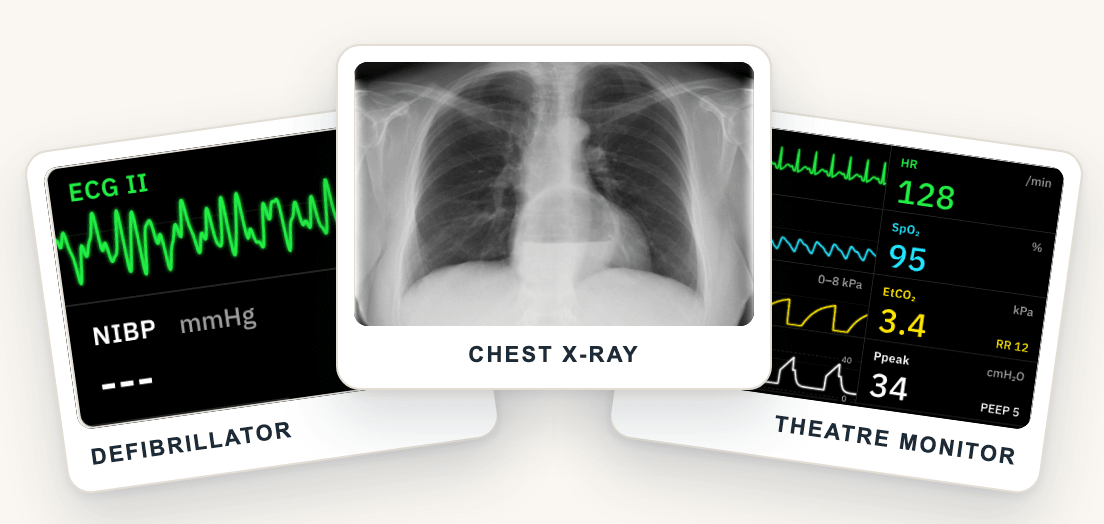
Over 1,300 questions across the Primary and Final vivas, from the basic sciences to critical incidents, cardiac and neuro, with ABGs, ECGs and viscoelastic traces to read. Answer by voice or keyboard, sit a full mock with written feedback, or revise with up to five friends.
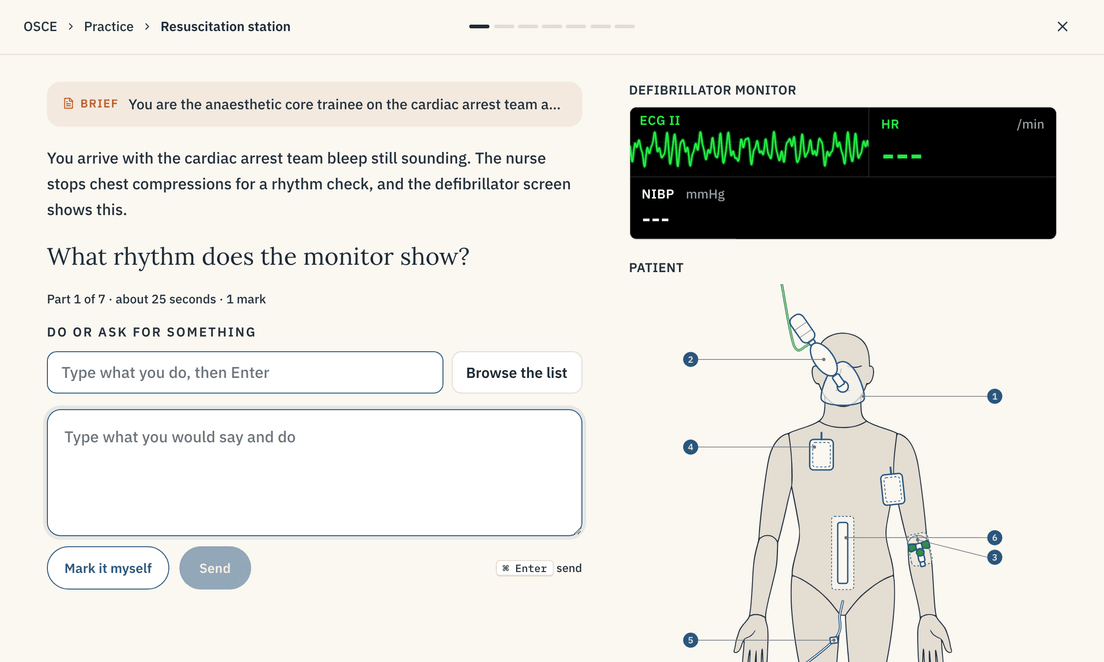
Primary OSCE stations, five minutes each.
Resus and simulation with a live monitor and a manikin, plus anatomy, X-rays, equipment, hazards, history and communication. Each station runs to the exam’s five minutes, then shows you what you covered, what you missed, and any safety point you left out.
Bring Anaesthesia to life.
Walkthroughs replace static textbook figures
with simulators you can play with.
Move the slider and see
the effects in real time.
Three stages every time:Foundations builds the model,
Application tests your knowledge,
Integration links it to clinical reasoning.Just like the FRCA.
Your CRQs, marked line by line, instantly.
Three seconds from finishing a CRQ to a mark and a sentence-by-sentence breakdown. Practise the way you'll actually be marked, long before exam day.
Stuck on a question? Ask Helix.
Pause on any SBA or CRQ and ask whatever isn't clear. Helix explains it in plain language, shows you why each wrong option is wrong, and pitches its answer at the depth the exam expects. It has read a decade of RCoA examiners' reports, so it knows the traps residents fall for.
Join the Helix community & start revising today.
Helix is free to start. Work through the FRCA question bank, climb the board, and revise beside the doctors doing the same.
- 1PluckySternum432,400+76 today
- 2FrostyCapnograph612,287
- 3CrispSpeculum951,318+143 today
- 4NimbleAmpoule25887+12 today
- 5BriskFemur12839+23 today
- 6DrowsyTibia78782
- 7SnappyAdrenaline96760+406 today
- 8BriskSyringe74615+11 today
- 9KeenDiaphragm46596
- 10WryVagus51573+37 today
- 11CrispTrocar50552
- 12VigilantSevoflurane81485+82 today
- 13VigilantNephron51453
- 14MerryStylet60450
- 15CosmicCatheter34387
- 16CrispPatella60368+368 today
- 17TactfulSternum58353+3 today
- 18WiredCochlea70306
- 19JollySternum39296
- 20SageStethoscope17267